
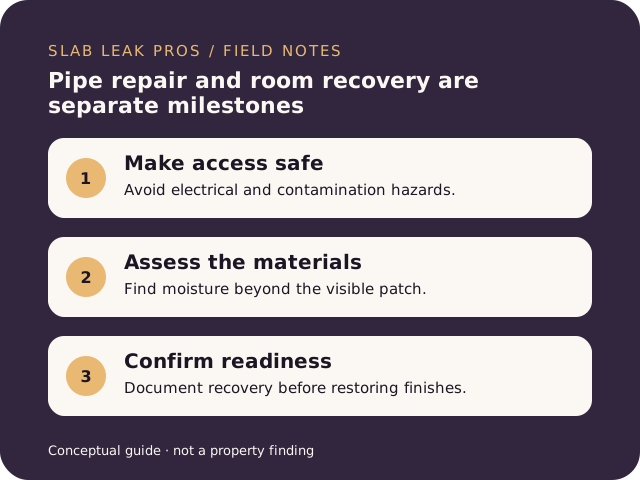
Is it safe to enter and use the affected room?
Personal safety comes before moving belongings or taking close-up pictures.
Keep clear of standing water near electrical equipment, wet outlets or damaged building materials. Do not step into a wet area to operate switches or unplug equipment. If the building appears unstable, keep away and arrange the appropriate urgent help. A visibly dry doorway does not prove the entire room is safe to enter.
We describe active-water precautions in our emergency slab leak repair guide. An immediate hazard may require local emergency services, rather than a routine plumbing appointment. If water might contain sewage or another contaminant, restrict contact and involve people experienced with that kind of cleanup. Appearance and smell alone cannot establish that water is safe. Photograph conditions only from a safe position.
Has the source been stopped and checked?
Confirm the plumbing result before treating the room as ready for recovery.
Ask what line was repaired, what remains isolated and which fixtures may be used. Temporary control may mean a shutoff or a restricted part of the system. It does not always mean the permanent pipe work has been completed. Written instructions should make any restrictions easy for everyone in the household to follow.
Keep the repair findings with your photographs. If moisture continues to appear, report the change rather than assuming every new patch is leftover water. Another source may need investigation. Our slab leak detection guide explains why visible moisture and supply-line findings must be assessed together. The repair record should describe the checks actually performed without claiming that they certify unrelated systems or the dryness of every concealed surface.
How far might the water have traveled?
The visible patch may be smaller than the affected assembly.
Floor coverings, baseboards and wall cavities can hide moisture. Ask the person assessing the damage to explain which materials were examined, where readings were taken and what remains inaccessible. A surface that feels dry to your hand may not represent the condition below it. The assessment should relate readings to the materials involved rather than rely on a single unexplained number.
In connected living spaces, also identify the rooms and people affected by access or drying equipment. Our Woodfield repair coordination guide raises access questions without assuming that water crosses a particular property boundary. Notify the appropriate owner or manager when shared areas may be involved. Permission to repair pipe does not automatically resolve permission to remove finishes elsewhere.
What does the EPA 24–48-hour advice mean?
It is a prevention goal, not a guaranteed recovery deadline.
The EPA homeowner mold guide recommends drying water-damaged areas and items within 24–48 hours to help prevent mold growth. That guidance calls for prompt attention. It does not mean a wet floor assembly will always dry in two days or that waiting two days is safe. Conditions, materials and access affect the recovery.
Ask what can be dried in place and what may require removal. Porous materials with mold growth may be difficult to clean completely. Avoid a blanket instruction to aim household fans at every wet area: suspected contamination needs a suitable plan. EPA also advises against running HVAC equipment known or suspected to be mold-contaminated. Consult a health professional about health concerns rather than using a visual checklist as medical clearance.
What should you record while drying continues?
Track changes and decisions so the next person can follow the recovery.
Maintain a dated folder for photographs, assessment reports, equipment notes and receipts. Record which materials were removed and why. Ask how progress will be evaluated and who decides that the drying goal has been met. A planned review date is useful, but it should not become a promise that all materials will reach the required condition by then.
The Woodfield urgent repair planning page separates controlling water from completing the work. That distinction also helps with household planning after the immediate event. Keep walking routes clear around equipment and follow its operator's instructions. Do not disconnect equipment merely because the room feels warmer or drier. If conditions change or a new odor appears, bring that information to the person overseeing recovery.
When should the floor or wall be closed again?
Make closure a documented decision rather than a visual guess.
Before painting, laying flooring or closing a wall, confirm that the relevant moisture and material conditions have been assessed. EPA advises cleaning mold and drying surfaces before painting or caulking them. Covering a damp or moldy surface can hide an unresolved problem. The chosen finish product may also have its own installation conditions that need checking.
Our Placentia guide to completing pipe and room recovery brings the repair choices into the wider plan. Keep separate records for pipe completion, moisture recovery and finish restoration. If cracking or movement raises structural concerns, obtain an appropriate assessment rather than asking a plumbing repair to certify the foundation. A finished-looking room should be the result of resolved conditions, with clear records of any remaining limits.
Questions about this guide
Does a successful pipe repair mean the room is dry?
No. We separate stopping leakage from measuring and managing moisture already present in the surrounding materials. Those tasks may finish at different times.
Will everything be dry within 48 hours?
We cannot promise that. EPA recommends prompt drying within 24–48 hours to help prevent mold, while the actual process depends on conditions and materials.
Should we paint over a small mold mark?
EPA advises cleaning mold and drying surfaces before painting or caulking. We recommend addressing the moisture source and getting appropriate help where needed.
Can household fans solve any water-damage problem?
No. We would first consider electrical safety, contamination and the affected materials. Suspected mold or sewage calls for a suitable professional plan.