
What does cold water slab leak repair address?
The work corrects a confirmed failure on the unheated water piping beneath the concrete floor.
Cold water slab leak repair in Placentia, CA addresses a leaking cold-water branch below a home's slab. The absence of warmth can make this problem less obvious than a hot-side leak. The repair still depends on locating the affected pipe and deciding whether to reach the damage directly or replace that branch along another route.
Cold-water piping may serve toilets, outdoor connections, appliances, and the cold side of mixing fixtures. A loss on that system can show up as unexplained usage without a clear temperature change indoors. The key question is whether the evidence points to the buried branch rather than a fixture, irrigation line, or incoming service.
We use this page to separate those possibilities before comparing work. Our Placentia under-slab repair overview puts the cold-side decision beside the other repair approaches. A proposal for this service should identify the particular line being repaired, not simply say that the house has a leak.
How do you separate a buried branch from ordinary water use?
Start with the measured supply and narrow the investigation through defined system boundaries.
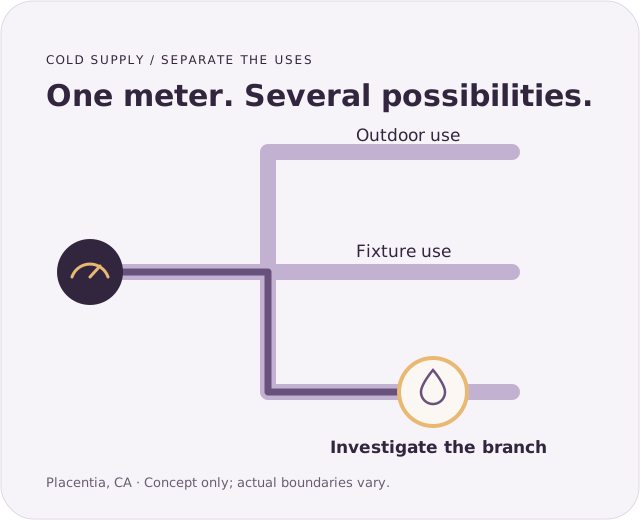
Understand what the meter includes
A meter may record more than the fixtures inside a dwelling. Irrigation and outdoor uses can share the measured supply, while some buildings have shared arrangements. Ask which uses are included before treating movement as an interior loss. A meter observation identifies flow through that meter; it does not establish the pipe's depth or route.
Check the accessible sources first
A toilet can pass water to the bowl without leaving a wet floor. An irrigation valve can leak while the controller appears off. Appliance connections and outdoor faucets also deserve attention. Finding one source should explain its part of the evidence rather than automatically close an investigation into separate indoor dampness.
Test a defined portion of piping
Controlled isolation separates a part of the plumbing for assessment. The inspector can compare the behavior of the cold supply with other sections, using suitable accessible points. Ask which valves form the test boundary and whether their condition affects the result. Professional slab leak detection combines that information with location evidence before proposing an opening.
Do not use a cool thermal image as a pass/fail result. Cold water may be close to the surrounding temperature. Moisture can also change surface conditions for reasons unrelated to a pipe beneath that spot. Testing the branch is more specific than assuming that every dry-looking or room-temperature tile is safe.
Which changes belong in your cold-side symptom notes?
These observations guide an investigation without assigning the cause in advance.
The meter records unexplained flow
Record whether automatic household uses were off. Share the start and end readings and the time between them, rather than a guess at the leak rate.
A toilet refills between flushes
This can explain some cold-water use without a buried failure. Include it in the history so the investigation can separate fixture loss from other symptoms.
A damp floor has no warm patch
A cold supply leak need not produce warmth. The useful detail is where moisture first appeared and whether it changed while household use was quiet.
Outdoor wetness does not follow the irrigation schedule
A yard source may be on a different branch. Describe both indoor and outdoor areas without assuming they share one damaged pipe.
Cold flow changes at several fixtures
A common branch, control valve, or supply issue could affect a group of fixtures. Note which outlets remain normal to help define the pattern.
You hear water but cannot find a running fixture
Quiet-room listening can supply a location clue. Avoid dismantling walls or floors to follow the sound; transmitted noise can be misleading.
Floor seams darken or lift
Moisture may collect under a covering before it reaches a visible edge. Save photos that show the progression and leave installed materials for planned assessment.
Water loss returns after a fixture repair
The repaired fixture may have been only one source. Compare observations made under similar conditions and ask whether another section needs isolation.
Why might an unheated buried line fail?
A cold-water line can develop joint problems or pipe-wall damage without producing a heat clue.
Corrosion, damage at a connection, and earlier work are possible parts of a cold-line failure. Which explanation fits depends on what is found. A pressure result may establish loss before the failed material is visible. Ask the repair record to distinguish the confirmed location from the suspected reason the pipe failed.
The arrangement beneath the slab may have changed over time. A fixture added during a remodel can create a branch that is absent from the original plan. A previous bypass can leave some older lines active and others abandoned. Gathering that history helps prevent testing a route that no longer carries water or overlooking one that does.
A repeated problem deserves a closer look at the retained pipe. That does not mean a whole-home replacement follows automatically. A repair decision should consider the location of past failures, the condition visible at access, and the alternatives available. Newer pipe elsewhere in the house may have a different history from the buried section.
What can you do before the inspection?
Gather a reliable use history without forcing valves or adding water to an affected area.
Check normal, accessible fixture areas for visible drips. Note any toilet cycling, outdoor watering, or appliance use during the suspected quiet period. If your meter is safely accessible and serves only your home, a no-use comparison may be useful. The EPA describes a two-hour meter comparison for finding unexplained use.
Skip that comparison if visible water is spreading or waiting would increase damage. Do not operate a shared control or utility equipment to make the test more convenient. Record that the control arrangement is unknown and ask the responsible manager or utility for clarification. A homeowner observation should not interrupt another unit's supply.
Prepare a simple room list showing which cold fixtures have changed. Keep bills and past repair descriptions with it. Leave walls, slab, flooring, and buried routes intact until the investigation has a defined reason for access. Useful preparation makes the first test more focused without turning into destructive exploration.
How should the cold-line repair be chosen?
Compare the condition of the pipe with the total access and restoration required.
A contained failure can sometimes be reached through a carefully planned slab opening. The damaged section is replaced, and the remaining branch stays active. Ask what supports keeping that surrounding pipe and how the opening will be assessed for hazards before cutting. Finishes, cabinets, and nearby embedded services can change the access plan.
A replacement route for the leaking branch may avoid some concrete disturbance by moving that line elsewhere. The new path needs suitable sizing, supports, protection, and connections. An overhead route can create wall or ceiling patching even when the floor is left intact. Ask which surfaces each proposal affects.
Cold-water fixtures still need a clear service plan during the work. Discuss toilets and other essential uses, whether one section can remain available, and who authorizes the eventual restoration. A branch diagram is useful because “water off” can mean different things to different occupants.
What happens from diagnosis to restored service?
Tie each work stage to the cold branch that the findings identify.
- Review the measured loss. Clarify the meter, automatic uses, and any accessible leaks already found.
- Define the affected line. Confirm the tested boundaries and the fixtures supplied before choosing access.
- Compare direct access with replacement routing. Include floor, wall, cabinet, and ceiling restoration in the discussion.
- Agree on interruption and approvals. Identify other occupants affected and who manages any required permit or inspection.
- Complete and test the pipe work. Ask for the test record before the access is concealed.
- Review the fixtures and moisture plan. Confirm usable service, outstanding drying needs, and the agreed finish repairs.
After service is restored, a comparable quiet-period observation can help assess whether the original unexplained use has changed. It should support the repair test rather than replace it. If usage stays unusual, review other measured uses before assuming the same buried failure remains active.
What changes the cost of a cold-side repair?
The total depends on more than how much replacement pipe is installed.
| Isolation difficulty | Shared supplies and unclear valve arrangements can add investigation and coordination. |
|---|---|
| Source and access | A well-located branch failure differs from a search involving indoor and outdoor possibilities. |
| Retained piping | The condition and history of the surrounding branch affect whether local replacement is suitable. |
| Essential fixtures | Toilets, kitchen use, and other occupied-home needs can change work staging. |
| Completion items | Testing, inspections, drying assessment, patching, and finish matching should be clearly included or excluded. |
Confirm requirements for the proposed plumbing scope with Placentia Building and Safety. A price comparison is meaningful only when both proposals describe the same work and the same completion responsibilities.
What local access details help the visit?
Use the actual dwelling layout and service records to prepare for testing.
In Placentia Lakes, identify which unit is affected and separate household-water observations from landscape-water observations. Arrange gate access in advance. A visible water feature is neither proof nor a dismissal of a domestic plumbing leak.
In La Jolla in Placentia, use the complete city address when arranging assistance. Confirm the supplier from the bill and the home's accessible controls. The neighborhood name cannot establish a water-service boundary or whether the suspect pipe lies beneath the slab.
Escalate a cold-side problem when water is spreading, safe entry is threatened, or a supply cannot be controlled without risk. Stay out of water near electrical equipment. Do not let the lack of heat create false reassurance about an active release. Immediate danger calls for emergency assistance; the demonstration contact here is nonworking.
What should you ask about a cold-water repair?
Clarify the test boundary and fixtures affected before approving work.
Can a cold-water slab leak be present without damp flooring?
Yes. Escaping water may remain out of sight or travel away from the room where the pipe fails. Unexplained supply loss can justify testing even when the finish appears dry. The investigation needs to identify the system and location rather than wait for a visible puddle.
Does a stationary meter rule out a leaking drain?
No. A drain carries wastewater after fixtures are used; it is not itself a pressurized supply measured by household flow. A quiet meter observation addresses a different question. Describe discharge-related symptoms so the inspector can choose drain testing if appropriate.
Why check toilets when the suspected pipe is under the floor?
A toilet can use cold water intermittently or continuously without wetting the floor. Ruling out that accessible loss helps interpret the meter and prevents a fixture symptom from being misread as a buried-line failure. Separate dampness may still need investigation.
Will cold-water repair also replace the hot-water lines?
Only if a broader scope is specifically proposed and justified. A cold-branch finding does not establish defects in every supply line. Ask which fixtures and pipe sections are included, and compare alternatives that address the confirmed problem before approving wider replacement.
Is a cold thermal image proof of a cold-line leak?
No. Temperature patterns can come from several sources and may provide little contrast with unheated water. A location should be supported by appropriate plumbing and moisture findings. Ask how the thermal observation was checked rather than accepting the image alone.
What should I watch after cold service returns?
Check the fixtures listed in the repair scope and review any remaining unexplained use under comparable conditions. Note new dampness without disturbing the repair. Keep the test record and follow the agreed drying and restoration plan rather than relying solely on the appearance of the floor.
Which cold-water area guide fits your home?
Review community-specific preparation questions, then confirm the plumbing details at your address.
- Cold Water Slab Leak Repair in Woodfield
- Cold Water Slab Leak Repair in Cinnamon Tree
- Cold Water Slab Leak Repair in Granada Park
- Cold Water Slab Leak Repair in Placentia Village Groves
- Cold Water Slab Leak Repair in Placentia Lakes
- Cold Water Slab Leak Repair in Corte Vista Villas
- Cold Water Slab Leak Repair in Northpoint at Alta Vista
- Cold Water Slab Leak Repair in Old Town Placentia
- Cold Water Slab Leak Repair in Atwood
- Cold Water Slab Leak Repair in La Jolla
- Cold Water Slab Leak Repair in Altura
- Cold Water Slab Leak Repair in Bella Vista on the Green
- Cold Water Slab Leak Repair in Alta Vista South
- Cold Water Slab Leak Repair in Hamptons on the Green
- Cold Water Slab Leak Repair in Mariposa Lane