
What is copper pinhole leak repair?
The repair addresses a small perforation in copper tubing while considering the material left in service.
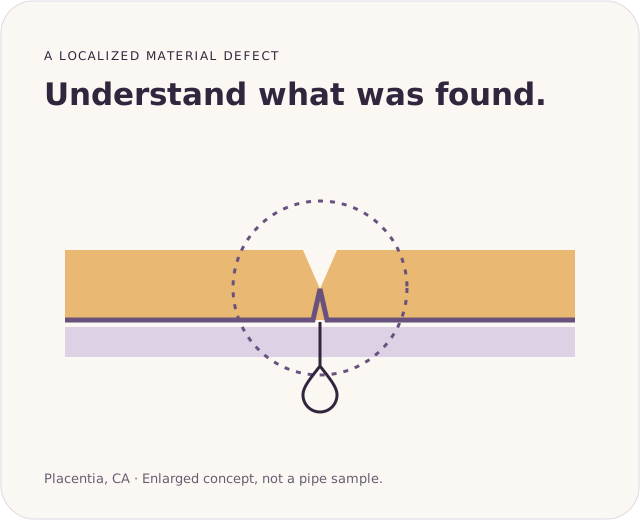
Copper pinhole leak repair in Placentia, CA replaces or otherwise properly repairs a section of copper supply piping that has developed a small opening. A pinhole can release water under pressure even when the visible defect is tiny. The work should address suitable surrounding material, not simply the point where water is seen escaping.
A pinhole describes the opening; it does not establish its cause. Localized corrosion, flow-related damage, installation conditions, and other factors may need review. The location of the damage on the pipe and the pattern of earlier failures can guide further questions. A city name or a house's age cannot establish which mechanism applies.
We connect the material question with the repair decision in our Placentia water-line repair planning guide. This page focuses on preserving evidence, choosing replacement limits, and understanding what a small defect does and does not tell you about the wider system.
How should the failed copper section be assessed?
The reconnecting points need to be suitable for the intended repair method.
The inspection should establish whether the leaking material is copper and whether water comes through its wall or from a joint. A wet fitting and a pipe-wall perforation are different observations. Photographs taken before removal can preserve the location and orientation of the defect. Ask that any conclusion about cause be tied to what was actually observed.
For concealed piping, locating the active loss comes before selecting access. A repair might involve exposed wall pipe or a buried section beneath a finished floor. A localized slab access repair adds construction and restoration questions that do not arise from replacing an easily reached piece. The tiny hole does not make those access tasks tiny.
After exposure, the contractor should assess the material chosen for reconnection. Joining new pipe to a section that cannot support the connection undermines the purpose of the work. Ask how the replacement extent was selected and what would change it. If the pipe condition is poor beyond the original estimate, request a defined revision before proceeding.
The selected joining method must fit the pipe, application, location, and applicable requirements. This is not a homeowner soldering exercise. Discuss the work method and protection for the surrounding area, but leave tool selection, preparation, and test procedure to the responsible professional.
Which signs help describe a suspected pinhole?
Use the evidence to characterize the defect and its history, without diagnosing a corrosion mechanism yourself.
A fine spray comes through a copper pipe wall
An exposed perforation can be visible without opening the system further. Keep away from electrical hazards and avoid touching the leak to judge its size.
A small wet point sits away from a fitting
Record the location before assuming it is a loose connection. Water can also track along the pipe from another source.
A similar failure has occurred on the same branch
Identify the dates and locations. Several repairs on one retained line provide a different decision context from one isolated event.
A removed section shows more than one damaged area
Ask what was found and how it affects replacement limits. The record should distinguish observed pits from an unsupported prediction about the whole house.
Staining appears around an accessible copper run
Surface discoloration alone is not proof of active leakage. Note moisture and changes over time without scraping or disturbing the material.
A quiet-period supply loss has no visible source
Concealed copper is one possibility, but the investigation must also account for fixtures and outdoor use before assigning a buried pinhole.
A previous patch is wet again
Clarify whether water escapes at the repair, beside it, or from another route. The next scope should respond to the actual finding.
Different branches have separate failures
A broader review may be worthwhile. Map those events and distinguish copper defects from unrelated appliance or fixture leaks.
Why does copper develop pinholes?
Pitting is localized attack on the material; explaining why it occurred can require more evidence than finding the leak.
Research treats copper pitting as a problem with multiple possible contributing factors. Water conditions, installation, and the way a system operates can matter. The Water Research Foundation's copper-corrosion project examines identifying and monitoring non-uniform corrosion. It is not evidence that a particular neighborhood's drinking water caused a homeowner's leak.
The inside and outside of a tube can be affected differently. A useful investigation records where damage appears and what surrounds it. A fitting, an old connection, or a nearby alteration may supply context. If a specialized cause assessment is needed, it should have a stated purpose and method rather than a conclusion based on pipe color.
A replacement piece can stop the active loss without proving why it began. That distinction matters when someone proposes additional treatment or extensive replacement. Ask which recommendation is needed for the immediate repair and which depends on a separate system review. Do not accept guaranteed prevention of all future pinholes from an unverified explanation.
When repeat events are documented across the supply network, compare the evidence for broader water-supply repiping. The comparison should identify what newer or suitable pipe would remain, and what failures a wider scope is intended to address.
What can you do before the pipe is removed?
Make a safe record of the location and repair history without scraping, clamping, or dismantling the line.
Photograph an exposed leak from a dry position if it can be done safely. Include enough context to identify the room and nearby connection. Do not use your hand to find a pressurized spray or move equipment around water. A close-up is not worth entering a hazardous area.
Locate earlier invoices and any photographs of removed material. Note whether the previous work involved hot water, cold water, or a different system. If the contractor can preserve a sample safely and appropriately, ask whether that would serve a specific assessment need. It is not necessary to store damaged pipe indefinitely without a reason.
Do not sand away deposits or apply an improvised patch before an inspection just to improve the appearance. That can hide evidence or fail to control the release. For active loss, use only a familiar authorized shutoff that is safe to reach, or seek assistance when the controls are uncertain.
What should a pinhole repair visit include?
The completed work should explain both the replaced material and the limits of the assessment.
- Identify the material and active source. Confirm copper piping and distinguish pipe-wall loss from a nearby joint or tracked water.
- Review earlier failures. Mark their locations so the present defect can be assessed in context.
- Agree on access and replacement limits. Include buried or wall access and the finish work it creates.
- Assess the exposed surroundings. Explain any reason to expand the section selected for reconnection.
- Complete the repair and relevant testing. Keep connections accessible until required checks and review are satisfied.
- Provide a clear final description. Record what was replaced, what was retained, and any unresolved cause questions.
At handover, ask whether the observed damage changes the recommendation for the rest of the branch. A recommendation can be conditional if more information is needed. Keep photographs and the written scope so a later event can be compared with the present finding rather than retold from memory.
What affects the price of repairing a pinhole?
Access and the condition of the reconnecting material can matter more than the opening's apparent size.
| Location | Visible pipe, wall access, and under-slab access require different work. |
|---|---|
| Replacement extent | Suitable reconnection points determine how much material needs renewal. |
| Investigation | Concealed loss or a separate cause assessment can add defined diagnostic tasks. |
| Joining and protection | The appropriate method and surrounding conditions shape the installation plan. |
| Return to use | Testing, required approval, drying assessment, and finish repairs should have clear ownership. |
For covered plumbing changes, check the applicable process with Placentia Building and Safety. Neither a small hole nor a short replacement automatically answers the permit question.
What should local homeowners clarify about access and urgency?
Keep property logistics separate from unsupported claims about community-wide copper failures.
In Placentia Village Groves, discuss approval if a replacement route or access changes an exterior surface. The repair finding should identify the actual active line before responsibility is assigned. Do not assume every similar-looking home shares the same copper layout.
For Northpoint at Alta Vista, describe the affected room, garage access, and floor level. These details can shape exposure and patching. A building's construction period cannot prove whether its original copper still serves the affected fixtures.
A small perforation is urgent when its water is spreading, a safe shutoff is unavailable, or electrical equipment is threatened. Do not judge the need for action by the word pinhole. Keep clear of hazardous water and request appropriate help. The fictional site contact does not accept service calls.
What should you ask about a copper pinhole?
Separate the observed defect from explanations and predictions that need more support.
Does green copper always mean there is a pinhole?
No. Discoloration is an observation, not a complete diagnosis. The inspector needs to establish active moisture and its source. Do not scrape the surface to look for an opening. Photograph the context and let the assessment distinguish a pipe-wall defect from tracked water or a joint leak.
Can the removed pipe prove the cause by itself?
A sample can supply useful evidence, but interpretation may need system history and surrounding conditions. Ask which conclusions are supported by inspection and which would require additional work. A hole establishes damage; it does not automatically establish the chemistry or installation mechanism behind it.
Should every copper line be replaced after one pinhole?
The appropriate extent depends on the actual condition, history, and feasible alternatives. One observed defect does not characterize all concealed pipe. Compare local replacement with broader options using the evidence available, including any newer sections that would otherwise be replaced without a clear reason.
Is an improvised external patch a permanent repair?
Do not assume it is. A temporary measure, if used by an appropriate person, needs defined limits and a permanent follow-up plan. Ask how the final method suits the damaged pipe and application. Avoid applying household products to a pressurized line as a substitute for assessment.
Can a pinhole happen on a hot or cold line?
Yes. The affected supply must be identified during the investigation. Temperature clues may help but cannot settle the question alone. Record whether the symptom coincides with hot-water changes, and keep the actual isolation findings with the repair description.
How should repeated failures be tracked?
Use a simple plan or room list showing each location, supply type, date, and section replaced. Keep invoices and photographs together. This allows a later recommendation to respond to a documented pattern instead of an unclear total of leak-related visits.
Which copper-repair community guide fits your home?
Review the relevant access context without assuming copper age or condition across the community.
- Copper Pinhole Leak Repair in Woodfield
- Copper Pinhole Leak Repair in Cinnamon Tree
- Copper Pinhole Leak Repair in Granada Park
- Copper Pinhole Leak Repair in Placentia Village Groves
- Copper Pinhole Leak Repair in Placentia Lakes
- Copper Pinhole Leak Repair in Corte Vista Villas
- Copper Pinhole Leak Repair in Northpoint at Alta Vista
- Copper Pinhole Leak Repair in Old Town Placentia
- Copper Pinhole Leak Repair in Atwood
- Copper Pinhole Leak Repair in La Jolla
- Copper Pinhole Leak Repair in Altura
- Copper Pinhole Leak Repair in Bella Vista on the Green
- Copper Pinhole Leak Repair in Alta Vista South
- Copper Pinhole Leak Repair in Hamptons on the Green
- Copper Pinhole Leak Repair in Mariposa Lane